As Christianity spread across the English kingdoms as well as Ireland, Wales, and Scotland, kings began accepting Christianity as their singular religion. In 640, Bede writes how the king of West Sussex banned idols and Pagan worship. He writes, “He was the first of the English kings that of his supreme authority commanded the idols throughout his whole kingdom to be forsaken and destroyed, and the fast of forty days to be observed; and that the same might not be lightly neglected, he appointed fitting and condign punishments for the offenders.” King Earconbert had a daughter who lived in a monastery and Bede details how her virginity and devotion to God upon her death and burial, a “sweet fragrance” rose from her tomb, signifying her holiness and reward by God. As the 7th century continued, more English kings converted to Christianity. In Ecclesiastical History, Bede writes of how those who did not convert to Christianity or were hesitant to convert suffered ill fates, unlike those who had converted. It was also not a straightforward process, even well into the 7th century. When some Christian converted kings died, they were replaced by Pagan kings who may have not held the same beliefs. There was divide between what kings believed and what faith was carried on, as Bede says, “Edwin was so zealous for the true worship, that he likewise persuaded Earpwald, king of the East Angles, and son of Redwald, to abandon his idolatrous superstitions, and with his whole province to receive the faith and mysteries of Christ.” It was not as if one king died, their successor was guaranteed to be Christian.
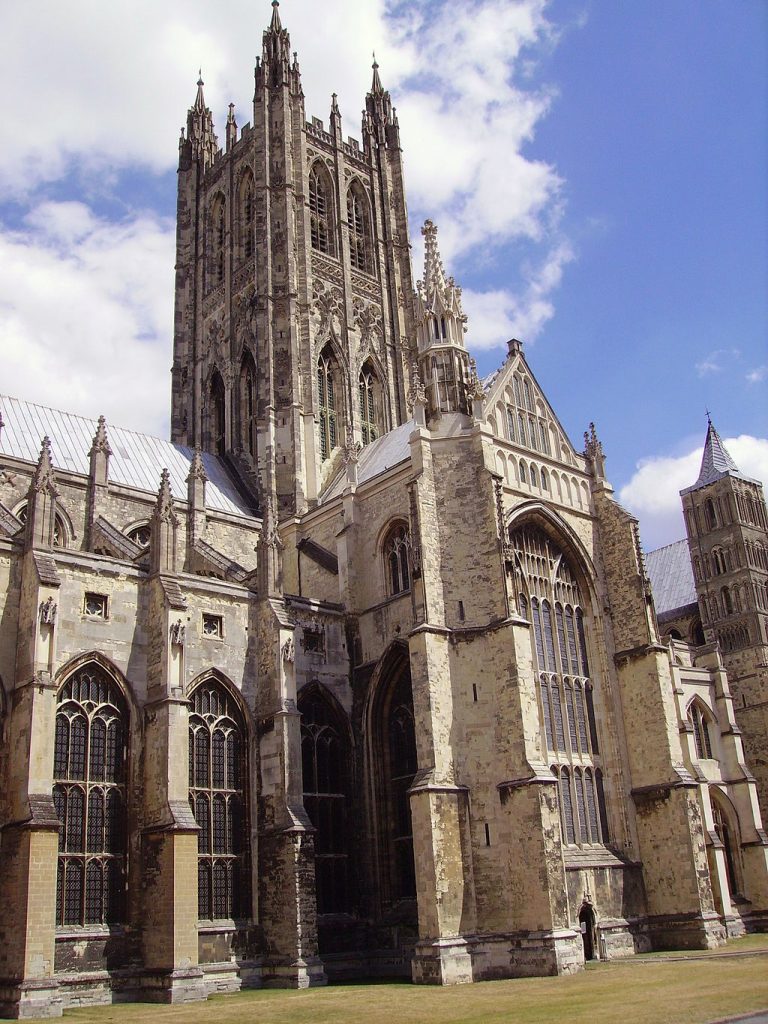
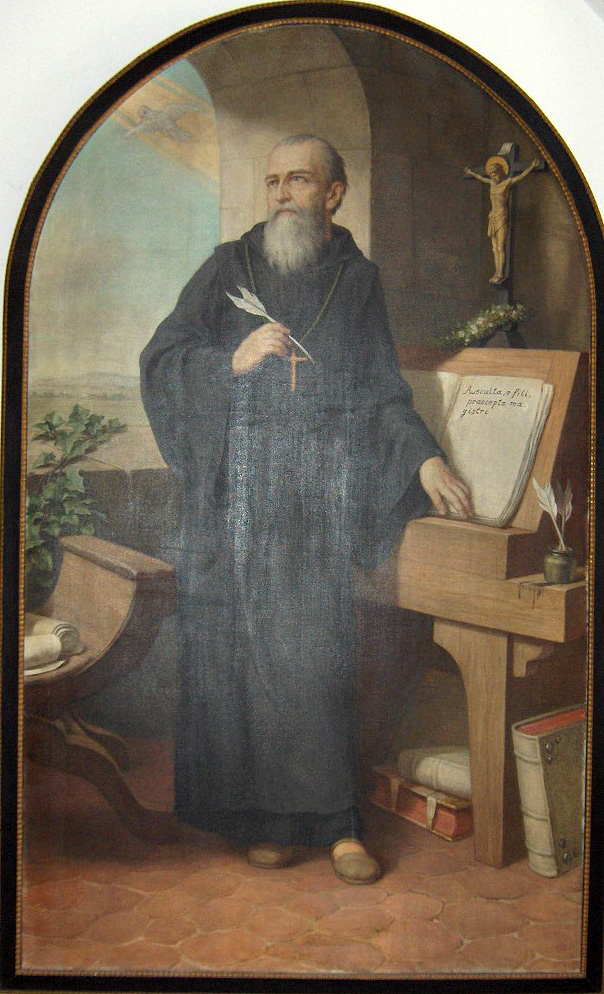
The first archbishops were based out of Canterbury but other bishoprics sprung up throughout England during the Medieval period such as in York. As time went on, bishops became more powerful and had more say in the governance of Medieval England. Monasteries also arose and acted as educational centers as well as places of religious teachings. These establishments were threatened as Scandinavian invaders who entered England in the 9th and 10th centuries and sought to pillage the riches of the Church. During the 10th century, the Rule of St. Benedict became a doctrine for English religious leaders. The doctrine of St. Benedict made statements such as, “An abbot who is worthy to preside over a monastery ought always to remember what he is called and to justify his title by his deeds.” Bishops such as Aethelwold of Winchester sought to reform the Church and lead the Benedictine movement that was gaining popularity. As Christianity became the primary religion in England, belief systems became more intricate and nuanced from the Early Middle Age Christianity of the 6th century. As said by historian Giles Constable, “In addition to these outward marks of piety there was a stress on spiritual inwardness. People believed that their eternal salvation depended on their personal relations to God as much or more than on their behavior or on the intervention of the clergy.” Britons were dedicated to becoming faithful, pious servants of God and were apt to abandon their previous proclivities to maintain parts of their Pagan religious past.
During the Medieval age, religion become more structured and became an integrated part of everyday life. Constable states, “The members of religious communities were bound together by a common way of life and often by adherence to a written rule or set of customs which formed the basis of what have been called textual communities.” Religion created community and also formed a sense of structure within these societies. The existence of Christianity in daily life was becoming common and as said by Constable, “Religious men and women were also involved with life outside their enclosures.” In contrast to the conversion age in which Paganism still had some roots within English society, once Christianity was firmly established in Britain, it became a central cultural component. By mid-Medieval period, Christianity was one of the most important institutions in England. While Pagans may have still existed within Britain during the mid to late Middle Ages, Christianity was definitely the dominant religion that also became a way of life.